Transforming Ferdowsi's Shahnameh into Captivating Musical Albums
Explore the fusion of Persian culture and music as we transform Ferdowsi's Shahnameh into lyrical masterpieces. Discover the mythical stories that inspire each album, showcasing the rich heritage and artistic expression of our portfolio dedicated to this timeless epic. Join us on this musical journey through history.
5/8/2024
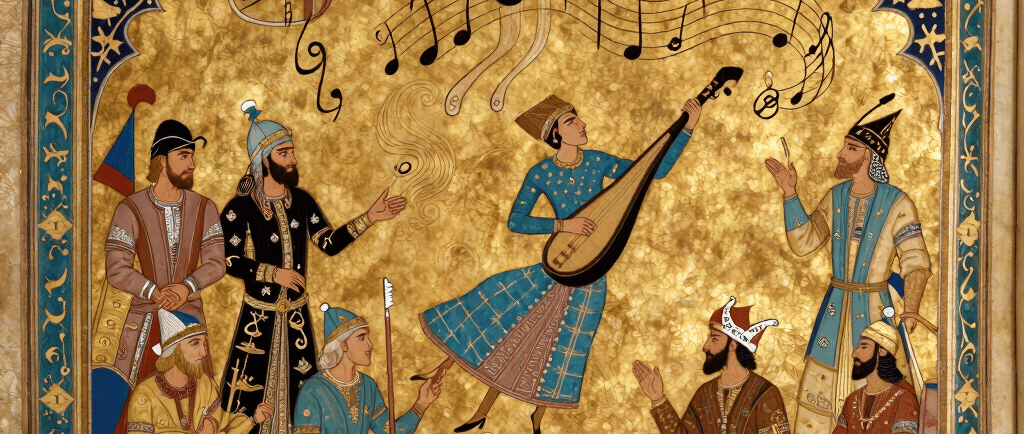
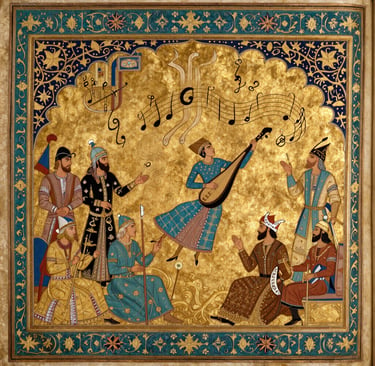
When Ferdowsi completed his sixty-thousand-verse epic in the tenth century, he gave Persia something rarer than a history: a living memory, set in meter, meant to be carried forward the way it mattered most, by voice. The Book of Kings project began with a simple question: what would it sound like to let that memory sing again?
The Shahnameh was never only a text meant to be read in silence. It was composed to be recited and chanted in gatherings, its meter already carrying something close to melody. Turning it into a series of musical albums felt less like adapting the poem and more like completing a circle it had always been reaching toward.
Each album in the collection takes on one arc of the epic, a hero's rise, a king's fall, a battle between father and son, and asks what instruments could carry its particular weight. The tar and setar trace the fine, aching lines of longing; the daf and tombak carry the thunder of armies; the santur scatters light across the quieter, more reflective passages. Nothing is decoration. Every note is chosen because Ferdowsi's own language already suggested it.
Eight volumes make up the series so far, each paired with the story that inspired it, among them Rostam and Sohrab, the tragedy of a father who does not recognize his own son on the battlefield, and the long, uneasy reign of Zahhak. Each is its own musical world rather than a chapter in one continuous score, so listeners can move through them in any order, the way a reader might dip into different parts of the Shahnameh without losing the thread of the whole.
The goal was never to modernize Ferdowsi or simplify him into something easier to consume, but to find a form, melody, harmony, rhythm, capable of holding the same weight his verses have carried for a thousand years, so new listeners can meet these stories the way Persian audiences once did: not on a page, but in the air, sung.
To go deeper into the myths behind each album, the Stories section walks through them volume by volume, and Tales & Verses continues to explore the wider world of Persian poetry that gave the Shahnameh its voice in the first place.